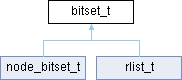
Bit set class. See https://en.wikipedia.org/wiki/Bit_array.
More...
#include <hexrays.hpp>
|
| | bitset_t () |
| hexapi | bitset_t (const bitset_t &m) |
| | ~bitset_t () |
| void | swap (bitset_t &r) |
| bitset_t & | operator= (const bitset_t &m) |
| bitset_t &hexapi | copy (const bitset_t &m) |
| bool hexapi | add (int bit) |
| bool hexapi | add (int bit, int width) |
| bool hexapi | add (const bitset_t &ml) |
| bool hexapi | sub (int bit) |
| bool hexapi | sub (int bit, int width) |
| bool hexapi | sub (const bitset_t &ml) |
| bool hexapi | cut_at (int maxbit) |
| void hexapi | shift_down (int shift) |
| bool hexapi | has (int bit) const |
| bool hexapi | has_all (int bit, int width) const |
| bool hexapi | has_any (int bit, int width) const |
| void | print (qstring *vout, int(*get_bit_name)(qstring *out, int bit, int width, void *ud)=nullptr, void *ud=nullptr) const |
| const char *hexapi | dstr () const |
| bool hexapi | empty () const |
| int hexapi | count () const |
| int hexapi | count (int bit) const |
| int hexapi | last () const |
| void | clear () |
| void hexapi | fill_with_ones (int maxbit) |
| bool hexapi | fill_gaps (int total_nbits) |
| bool hexapi | has_common (const bitset_t &ml) const |
| bool hexapi | intersect (const bitset_t &ml) |
| bool hexapi | is_subset_of (const bitset_t &ml) const |
| bool | includes (const bitset_t &ml) const |
| void | extract (intvec_t &out) const |
| | DECLARE_COMPARISONS (bitset_t) |
| | HEXRAYS_MEMORY_ALLOCATION_FUNCS () class iterator |
| iterator | itat (int n) const |
| iterator | begin () const |
| iterator | end () const |
| int | front () const |
| int | back () const |
| void | inc (iterator &p, int n=1) const |
◆ const_iterator
◆ bitset_t() [1/2]
◆ bitset_t() [2/2]
| bitset_t::bitset_t |
( |
const bitset_t & | m | ) |
|
|
inline |
◆ ~bitset_t()
◆ swap()
◆ operator=()
◆ copy()
◆ add() [1/3]
◆ add() [2/3]
◆ add() [3/3]
◆ sub() [1/3]
◆ sub() [2/3]
◆ sub() [3/3]
◆ cut_at()
| bool bitset_t::cut_at |
( |
int | maxbit | ) |
|
|
inline |
◆ shift_down()
| void bitset_t::shift_down |
( |
int | shift | ) |
|
|
inline |
◆ has()
| bool bitset_t::has |
( |
int | bit | ) |
const |
|
inline |
◆ has_all()
| bool bitset_t::has_all |
( |
int | bit, |
|
|
int | width ) const |
|
inline |
◆ has_any()
| bool bitset_t::has_any |
( |
int | bit, |
|
|
int | width ) const |
|
inline |
◆ print()
◆ dstr()
| const char * bitset_t::dstr |
( |
| ) |
const |
|
inline |
◆ empty()
| bool bitset_t::empty |
( |
| ) |
const |
|
inline |
◆ count() [1/2]
| int bitset_t::count |
( |
| ) |
const |
|
inline |
◆ count() [2/2]
| int bitset_t::count |
( |
int | bit | ) |
const |
|
inline |
◆ last()
| int bitset_t::last |
( |
| ) |
const |
|
inline |
◆ clear()
◆ fill_with_ones()
| void bitset_t::fill_with_ones |
( |
int | maxbit | ) |
|
|
inline |
◆ fill_gaps()
| bool bitset_t::fill_gaps |
( |
int | total_nbits | ) |
|
|
inline |
◆ has_common()
◆ intersect()
◆ is_subset_of()
◆ includes()
◆ extract()
◆ DECLARE_COMPARISONS()
| bitset_t::DECLARE_COMPARISONS |
( |
bitset_t | | ) |
|
◆ HEXRAYS_MEMORY_ALLOCATION_FUNCS()
| bitset_t::HEXRAYS_MEMORY_ALLOCATION_FUNCS |
( |
| ) |
|
|
inline |
◆ itat()
| iterator bitset_t::itat |
( |
int | n | ) |
const |
|
inline |
◆ begin()
| iterator bitset_t::begin |
( |
| ) |
const |
|
inline |
◆ end()
| iterator bitset_t::end |
( |
| ) |
const |
|
inline |
◆ front()
| int bitset_t::front |
( |
| ) |
const |
|
inline |
◆ back()
| int bitset_t::back |
( |
| ) |
const |
|
inline |
◆ inc()
| void bitset_t::inc |
( |
iterator & | p, |
|
|
int | n = 1 ) const |
|
inline |
The documentation for this class was generated from the following file: